What a moulage was actually for
A wax cast stored what the ward could not guarantee: the same presentation, available on demand, without a patient.
The problem it solved
Teaching in the Allgemeines Krankenhaus depended on volume. Ferdinand von Hebra's wards were large, and the patient population of a major Viennese public hospital supplied a breadth of cases that most European clinics could not match. Even so, a ward round was hostage to chance. A rare presentation admitted in January might resolve, or the patient might leave, long before the new intake of students arrived in March. The moulage — a coloured wax cast taken from the living body — removed that contingency.
The logic was precise: take the cast while the presentation is available, and the teaching object outlasts both the patient and the physician's memory of him. A student arriving years later could examine the surface, read the contours and register the colour with a fidelity that a hand-drawn plate, however skilled, could not offer, being compressed into two dimensions and interpreted through an artist's eye. The cast preserved depth and, crucially, colour mixed and applied at the time of casting to match what the maker actually saw.
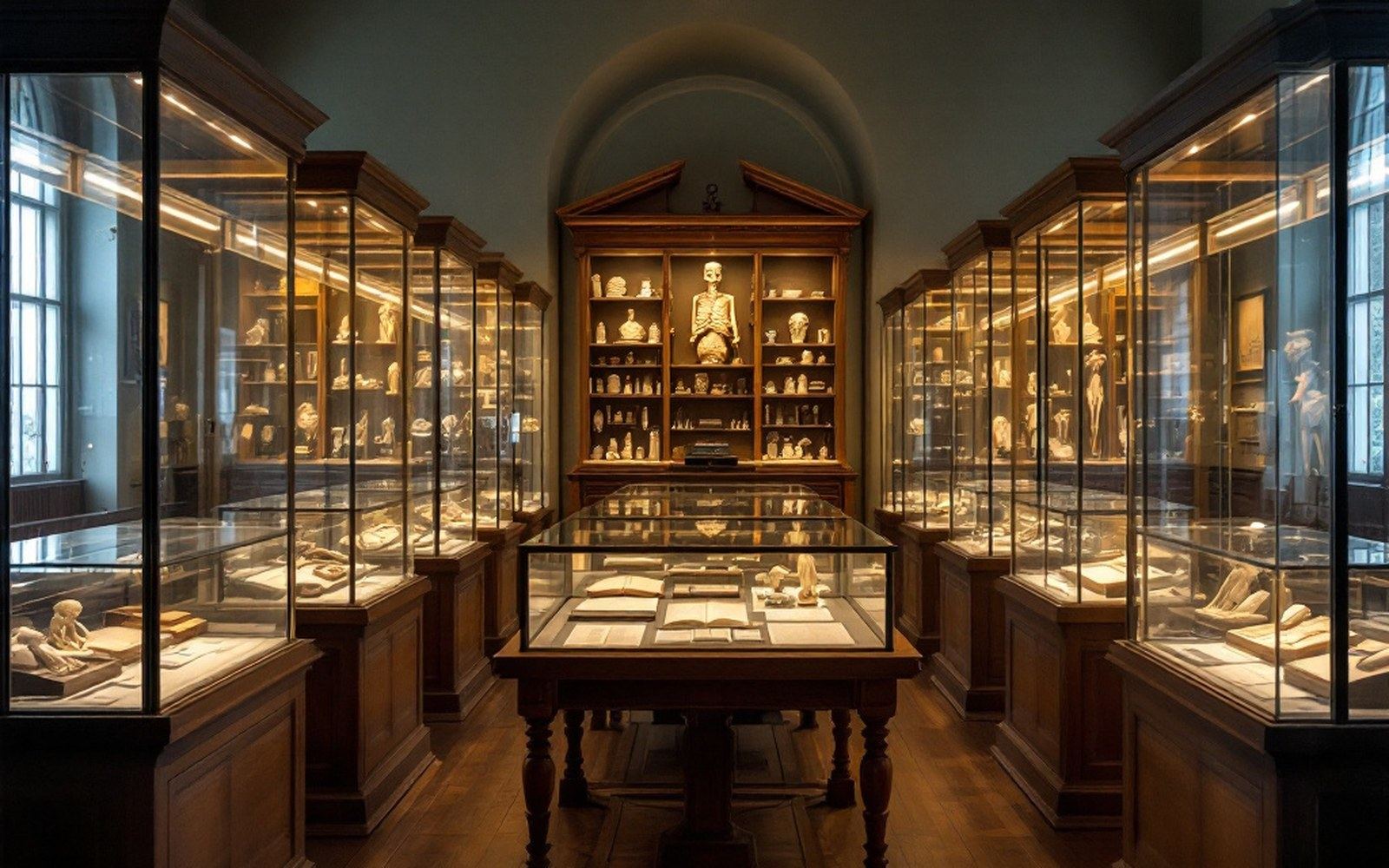
Rarity drove the argument. Common cases would recur on the ward soon enough; it was the unusual variant that justified the labour and cost of producing a moulage. The Josephinum collection in Vienna makes this logic visible: the range of subjects represented in wax corresponds closely to the range of subjects Hebra found hardest to convey through the printed atlas — conditions whose surface qualities resisted the conventions of lithography and whose colour could not be reliably reproduced even after hand-finishing each plate.
The teaching argument in brief
- Moulagea coloured wax cast taken from a living patient; the term is French, used throughout European medical teaching collections
- Allgemeines Krankenhausthe large Viennese public hospital where Hebra held his clinical ward
- Josephinumthe Vienna medical-military academy whose collection houses a significant group of teaching casts
- Rare presentationthe specific institutional justification for the labour of casting: common cases recur on the ward; unusual ones do not
Teaching without the patient
The object also solved an ethical friction that the ward could not. Extended examination of a patient for purely pedagogical purposes, repeated across student cohorts, was never uncomplicated. A cast in a cabinet drawer made no such demand. It could be passed between students, placed under strong light, returned to its box and brought out again the following semester. The cabinet at the Josephinum preserves this function in its very architecture: display cases designed for browsing, drawers scaled for individual retrieval.
What a moulage was not for is worth stating plainly. It was not a research specimen, not a memorial portrait and not a substitute for the ward. Hebra's programme insisted on bedside teaching as the primary encounter; the cast was the preparation for that encounter, or the record of what the ward had briefly offered and could not guarantee again. The wax extended the curriculum into time — backwards to a patient already gone, forward to a student not yet arrived.