The conservators' bench
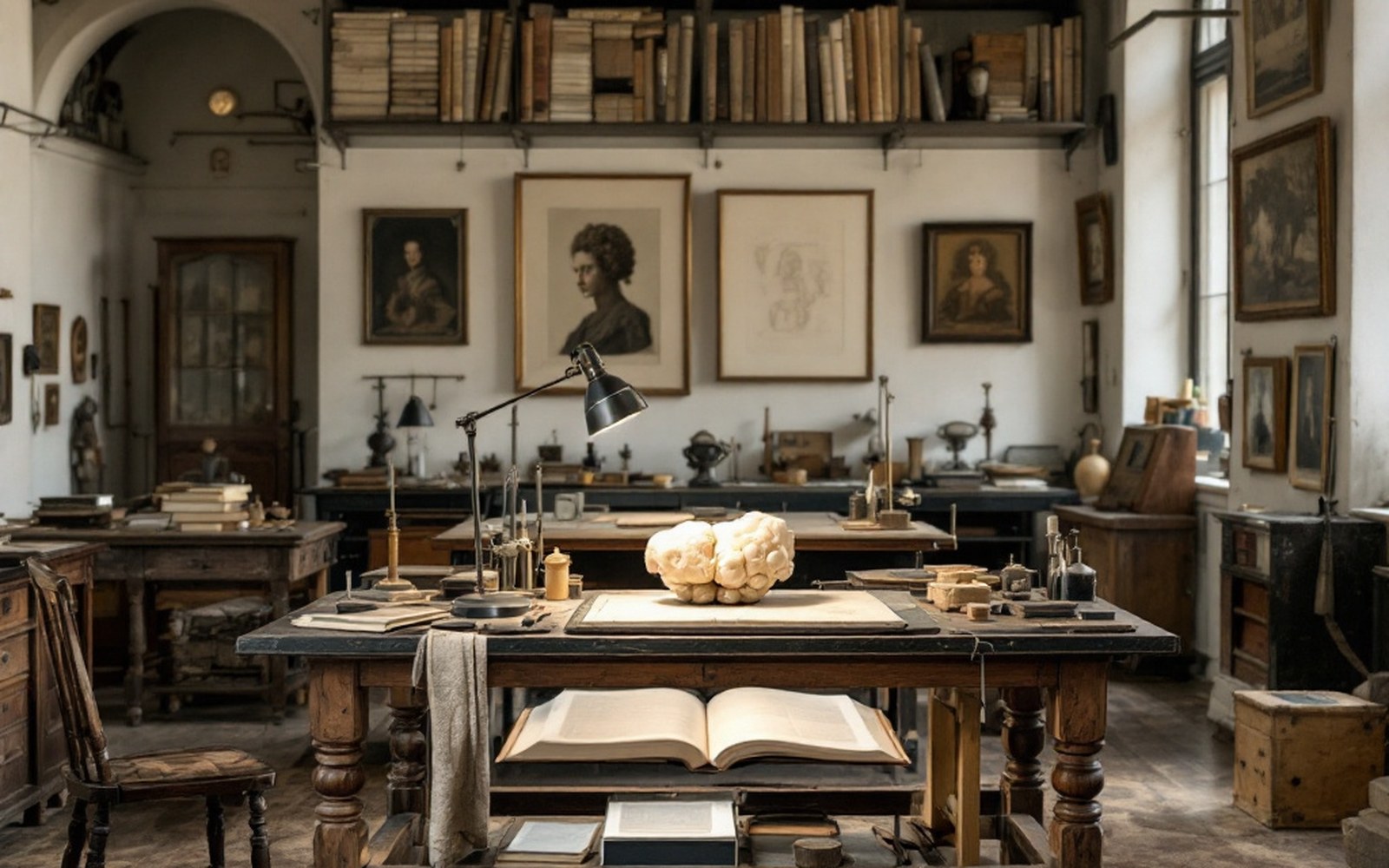
Wax does not keep itself
A wax moulage — a cast taken from a living body, coloured to match it, mounted for teaching — looks, at first glance, like something that ought to last forever. It is sealed, it is inert, it sits behind glass. In practice, wax is among the most demanding materials a conservation department can inherit.
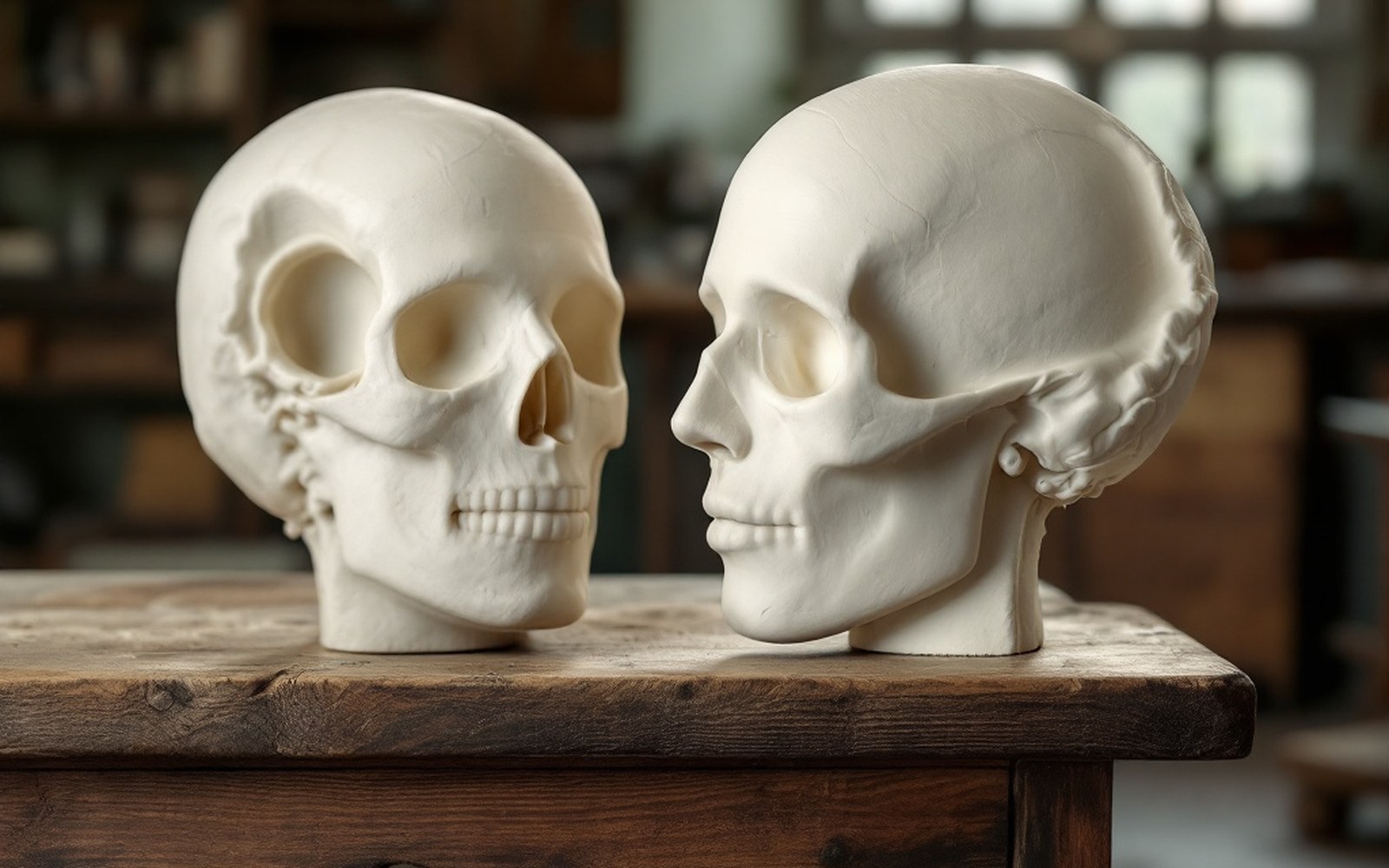
The instability is built into the chemistry. Nineteenth-century moulage makers worked with beeswax compounded with resins, pigments and sometimes turpentine-based softeners — a formulation arrived at empirically, varied from one workshop to another, and never standardized across collections. The Viennese pieces held at the Josephinum share a general character but not an identical recipe, and that heterogeneity is itself a conservation problem: no single treatment protocol fits the whole cabinet.
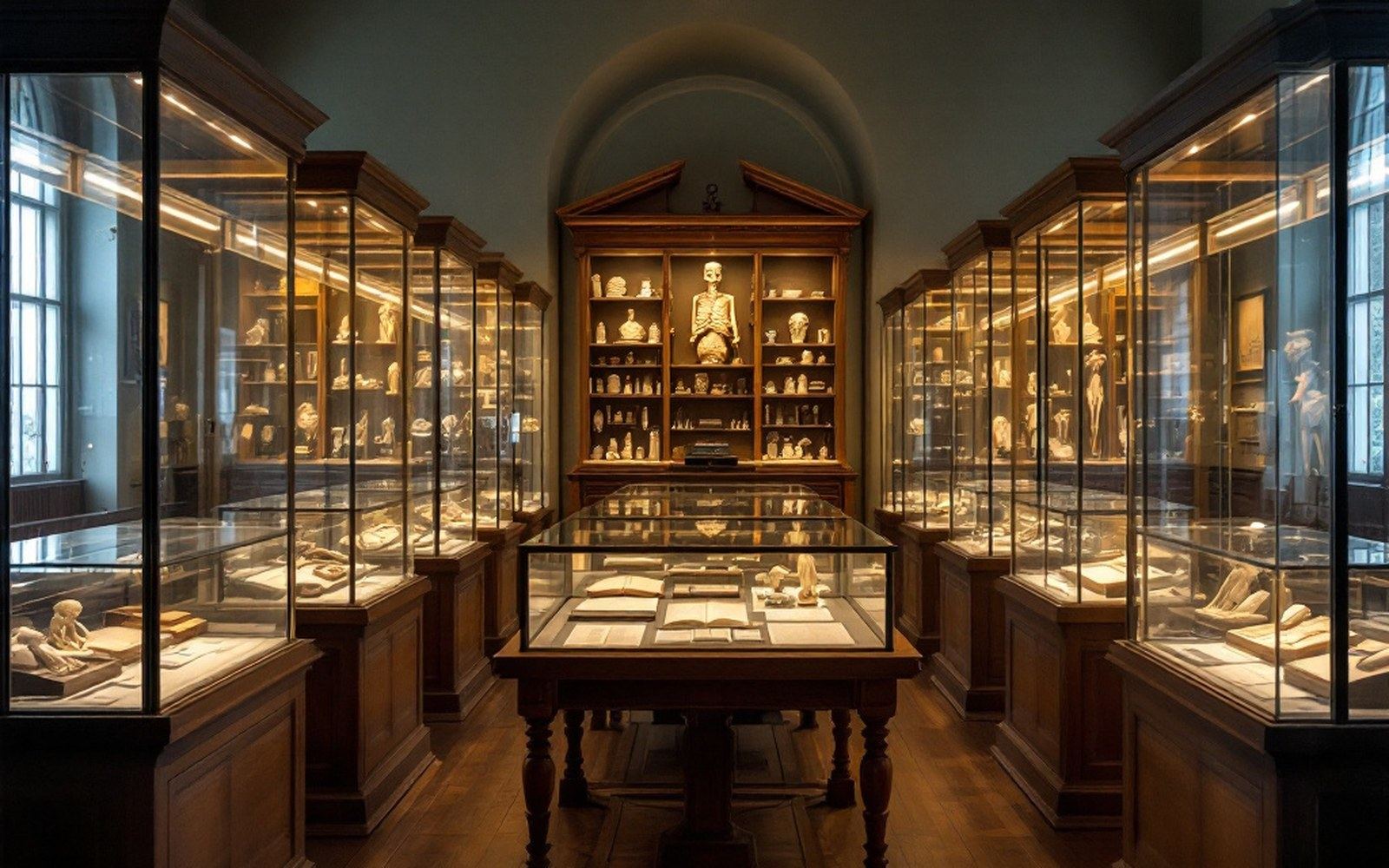
What time does to the material
The threats accumulate slowly and then, sometimes, suddenly. Wax creeps under its own weight when ambient temperature rises even a few degrees above the seasonal average — the lower lip of a figure droops, a raised surface flattens, a textured detail that took a craftsman hours to model disappears over a summer. Light degrades the organic pigments layered onto the surface; the colours shift independently of one another, so that a cast painted from a single sitting model becomes, over decades, a study in differential fading. Dust and airborne pollutants migrate into the microporosity of the surface and resist removal by any method aggressive enough to lift them without abrading the underlying wax.
Chronology of degradation mechanisms
- Wax creepbegins with any sustained temperature rise above ambient norms; cumulative
- Pigment fadingbegins immediately on light exposure; rate depends on pigment type and wavelength
- Armature-driven crackingfollows humidity cycling; may take decades to surface
- Dust infiltrationcontinuous; reversible only by methods that risk surface abrasion
Structural failure is subtler. The armatures — wood, wire, papier-mâché — that give a moulage its internal skeleton respond to humidity cycles differently from the wax shell around them. Seasonal expansion and contraction opens cracks from inside, driving them outward to the surface in lines that can look like craquelure on an old painting but are mechanically distinct and harder to reverse. At the Josephinum, where the moulage collection is documented as part of a UNESCO-recognised heritage holding, collections staff have worked with materials scientists to map the internal structure of individual pieces non-invasively before deciding whether intervention is even possible.
The ethics of intervention
Conservation at this level is as much a philosophical problem as a technical one. The moulage was made to teach by resemblance — its value is precisely that it looked, and still looks, like something real. Any intervention that restores colour, consolidates a crack or re-levels a sagging surface risks moving the object away from its historical state toward a restorer's idea of what it should look like. The international guidance issued by ICOM-CC, the International Council of Museums' conservation committee, draws a principled distinction between conservation — stabilizing what exists — and restoration — returning something to an earlier appearance. For moulages, the line between the two is genuinely difficult to locate, because the object's function depended on appearance in a way that a manuscript or a ceramic does not.
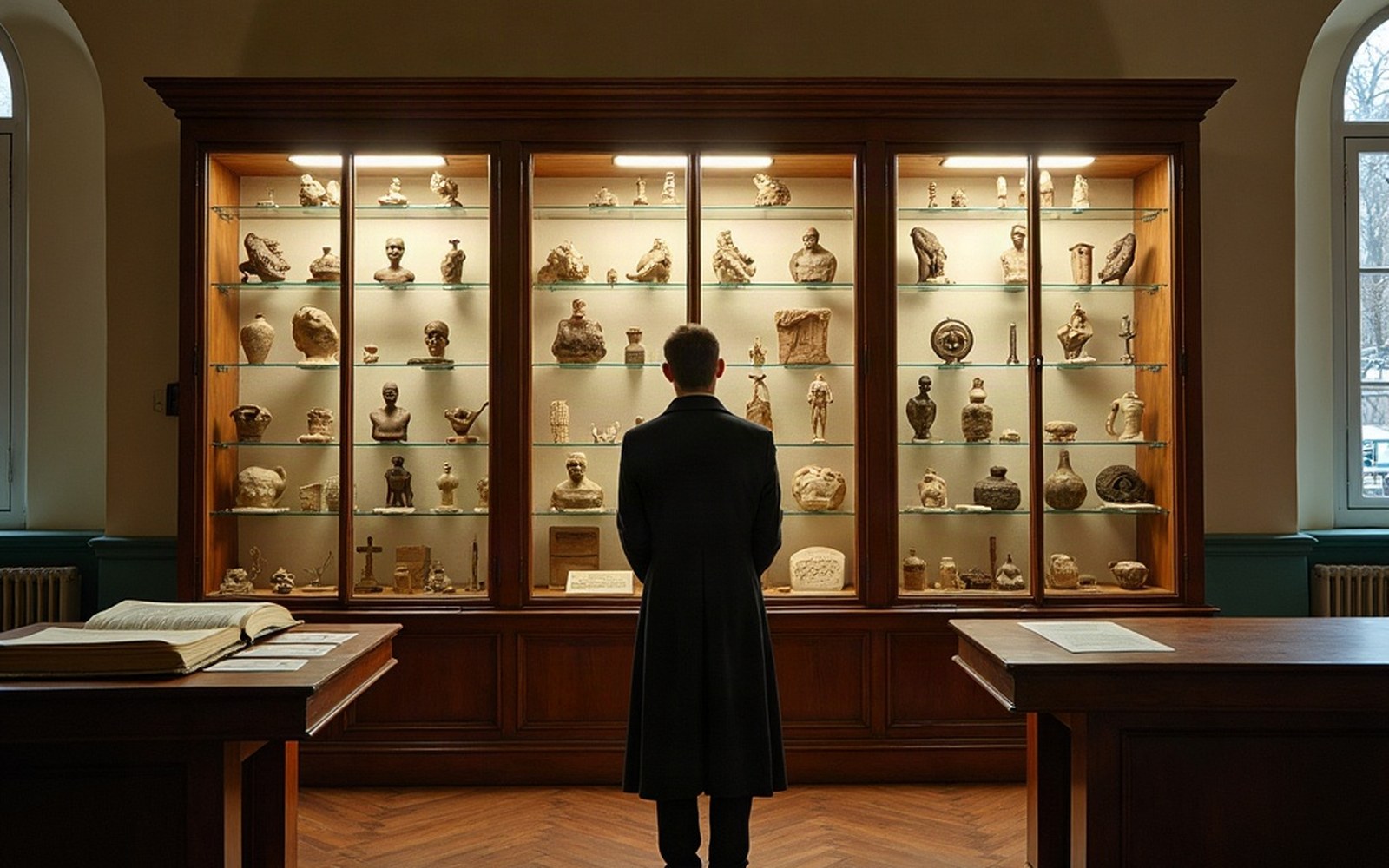
The received approach at major European medical collections is to document exhaustively before touching anything: high-resolution photography, reflectance transformation imaging where the surface is complex enough to warrant it, technical analysis of pigment and binder. Only once the baseline is fixed does the question of physical intervention arise, and often the answer is that controlled storage — stable temperature, low light, filtered air — does more than any intervention on the surface.
What survives and what is lost
Some losses are irrecoverable. Pigment layers stripped by a well-meaning cleaning in the early twentieth century do not come back. A moulage retouched with synthetic paint in the 1950s carries that retouching permanently into its record; the original chromatic evidence is gone. This is why provenance and treatment history matter as much to a conservator as they do to an art historian: the bench notes from every previous intervention are part of the object's biography, and a collection that has kept them is, in this respect, richer than one that has not.
What the conservators' bench finally produces is not a restored object but a stabilized one — held at the point where the past stopped, with its losses documented rather than disguised, ready for the next generation of students to read.