The stone and the press
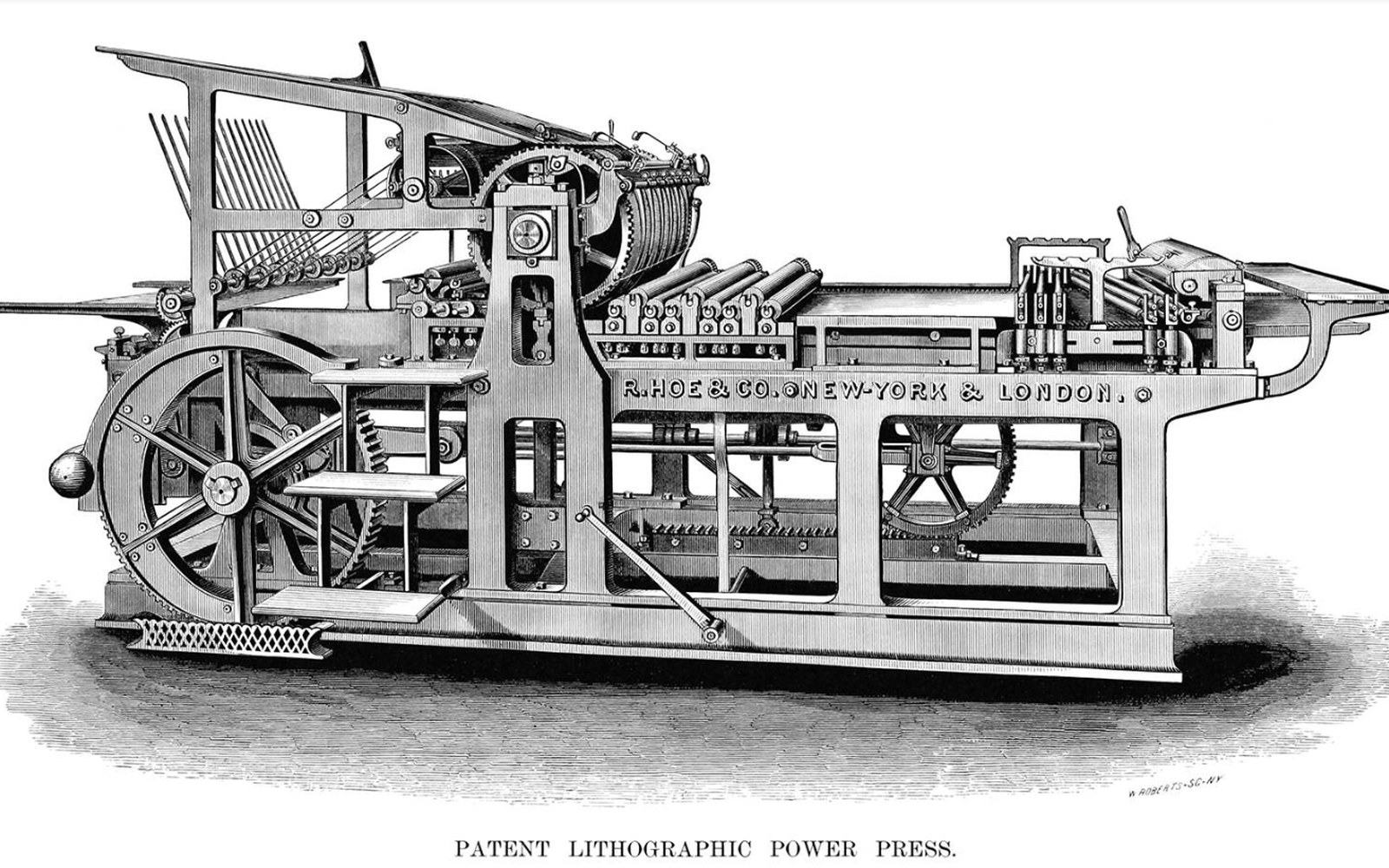
How a flat surface became a reproductive medium
Lithography, from the Greek lithos (stone) and graphein (to write), prints from a flat surface rather than a raised or incised one. That distinction, which sounds technical to the point of dryness, had direct consequences for the kind of image a nineteenth-century medical atlas could contain. Where woodcut and copperplate engraving both required a craftsman to translate a drawing into cut lines — and where the translation inevitably lost something — lithography allowed an artist to draw directly onto the printing surface. What went onto the stone was, very nearly, what came off it.
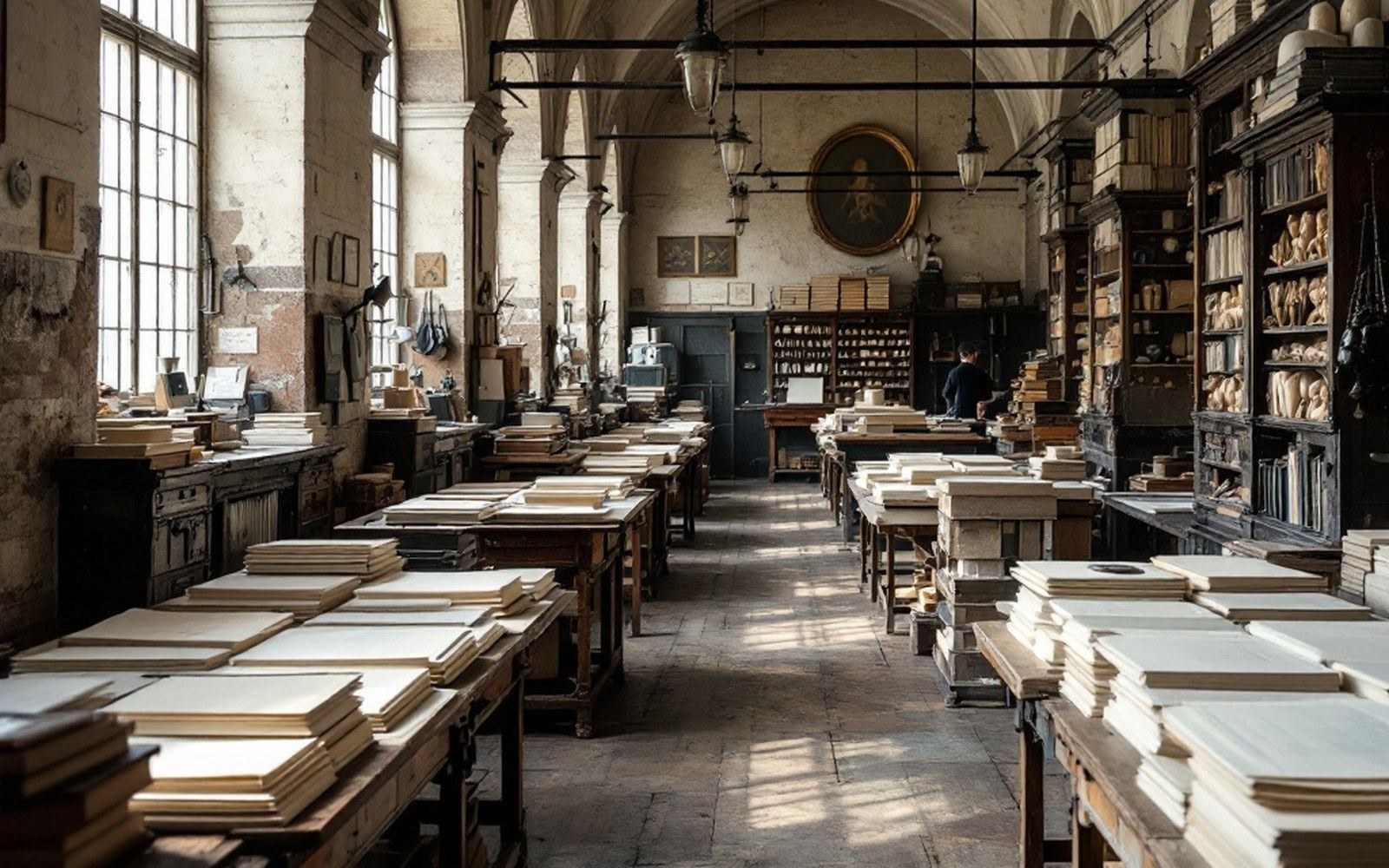
The process had been discovered accidentally by Alois Senefelder in Bavaria in 1796, and its underlying principle is chemical rather than mechanical: grease repels water, and water repels grease-based ink. An artist draws on a finely grained limestone slab with a greasy crayon or ink. The stone is then dampened; the wet areas reject the oily printing ink, and the drawn areas accept it. Press the paper. The image transfers. The stone is neither carved nor etched in any meaningful depth; the image sits almost on the surface, which is why lithography could render the full tonal range of a pencil drawing — soft greys, blended edges, the gradations that engravers had to approximate with networks of cut lines. Senefelder's own account of the invention describes a medium he initially saw as a cheap substitute for engraving; what it became was something rather different.
The tonal range that changed medical illustration
For a working clinician trying to teach from a printed page, the difference between engraving and lithography was the difference between a diagram and a depiction. Engravings of skin conditions were inevitably schematic, their textures rendered through cross-hatching that bore only an approximate relationship to what the eye actually saw. Lithography, because the artist's own hand marked the stone, preserved the quality of a careful observational drawing. Graduated shading was possible. So was the fine, irregular texture of a surface that was not geometrically regular — which almost no surface of clinical interest ever is.
This is the technical foundation on which the great Viennese dermatological atlas of the 1850s–1870s rests. Ferdinand von Hebra, who had reorganised the understanding of skin disease around pathological anatomy rather than external appearance, required an illustration medium precise enough to show structural distinctions at the surface level. The lithographic plate met that requirement in a way no earlier process could have done. Anton Elfinger, the artist who drew the plates, worked directly in the lithographic medium: his draughtsmanship went onto the stone, not into a woodblock that a different craftsman would then interpret. The fidelity was real, not approximate.
The technical process, step by step
- Greasy crayon or ink applied to dampened Solnhofen limestonethe chemical principle
- Stone dampened, then inkedwet areas reject ink, drawn areas accept it
- Flatbed scraper press used rather than a roller pressleather scraper bar draws across paper under pressure
- Gum-arabic treatment of non-image areasa later refinement that sharpened definition
- Colour absent from the printed impressionadded by hand-colourists following a master copy
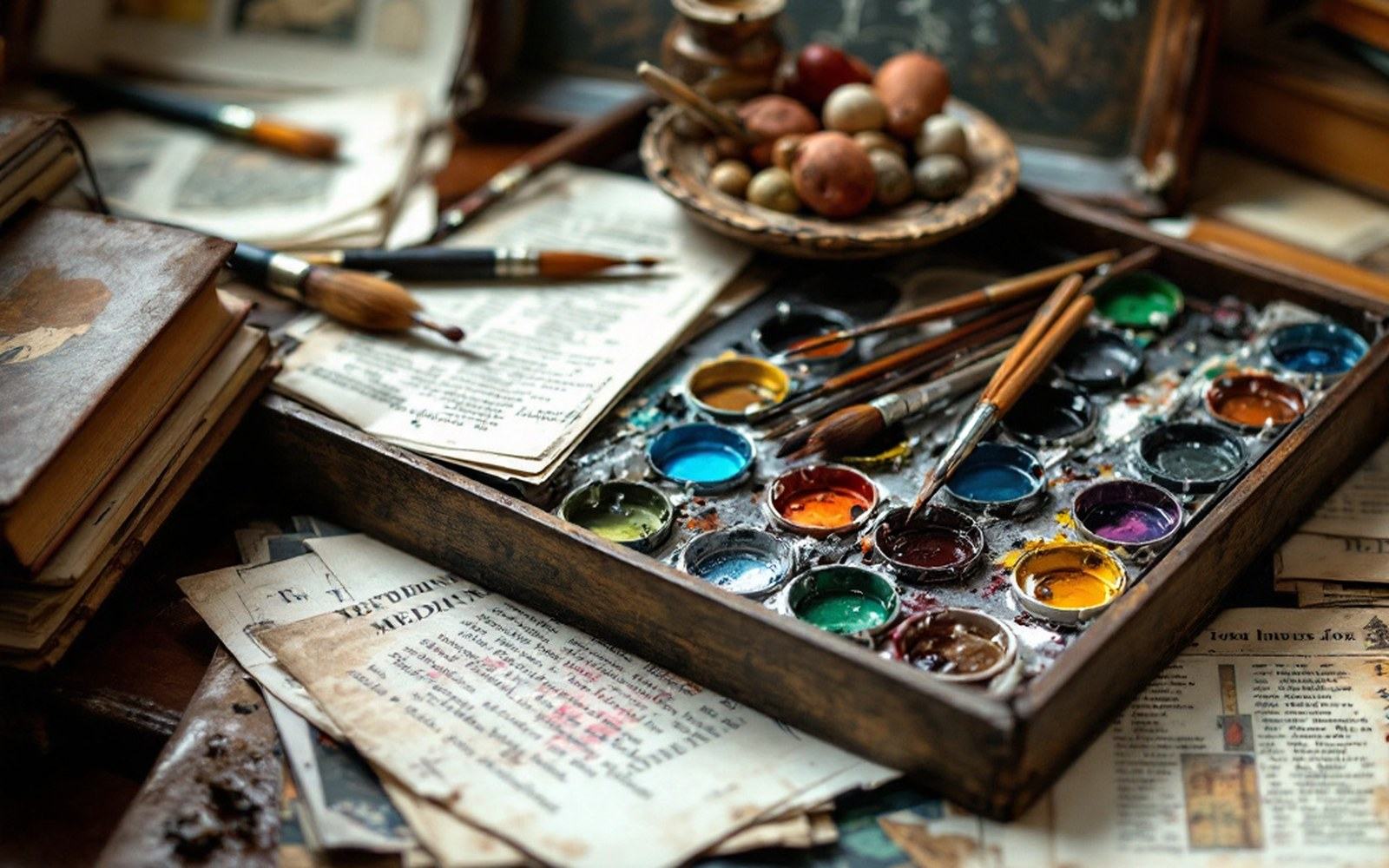
What a lithograph cannot reproduce easily, however, is colour. The early process printed in a single tone — typically black or a warm brown-black — and the colour that appears in the atlas plates was added afterward, by hand, by workers following a master copy. This matters for understanding what kind of object the atlas actually is: not a mechanically colour-printed work but a hybrid, part press, part workshop labour. The stone carried the tonal structure; the brush supplied the chromatic information. The two together produced the image as it survives in complete sets.
Stone, press and the trade behind them
Lithographic printing in mid-nineteenth-century Vienna was a commercial trade with its own hierarchy of skills, its own supply chains and its own geography. The limestone most prized for fine-grain work came from Solnhofen in Bavaria — a sedimentary deposit dense enough to hold a sharp crayon line and porous enough to accept dampening evenly. Vienna's print shops depended on a steady supply of imported stone, and a large atlas plate required a slab of corresponding size: the logistical tail behind a single finished image was longer than it looks.
The press itself was a flatbed scraper press rather than the roller (rolling) presses used for copperplate printing. The stone lay flat on the bed; a scraper bar — a straight edge covered in leather — was drawn across the back of the paper under pressure, transferring the inked surface to the sheet. The pressure had to be even and sustained; uneven scraping left the image darker at one edge. Running a large edition required constant re-inking of the stone, constant re-dampening, and constant attention to the balance between the two. A stone could be used for many hundreds of impressions before the drawn surface began to break down, but each impression required a skilled pressman's judgment.
Senefelder's original process was modified over the following decades in ways that made it more reliable for fine work: the gum-arabic treatment of the stone's non-image areas, for instance, improved the repulsion of ink from the wet surface and allowed crisper definition. By the time Elfinger was drawing the atlas plates, Viennese lithographic workshops were operating with several decades of refinement behind them. The craft was mature. What it still could not do was reproduce colour mechanically, which kept the hand-colourists employed throughout the atlas's long publication run — a run that extended in parts across some two decades.
Chronology
- 1796Alois Senefelder discovers the lithographic process in Bavaria
- 1850s onwardHebra atlas plates issued in parts, drawn by Anton Elfinger directly onto stone
- Two decadesapproximate span of the atlas's part-publication run
The stone as archive
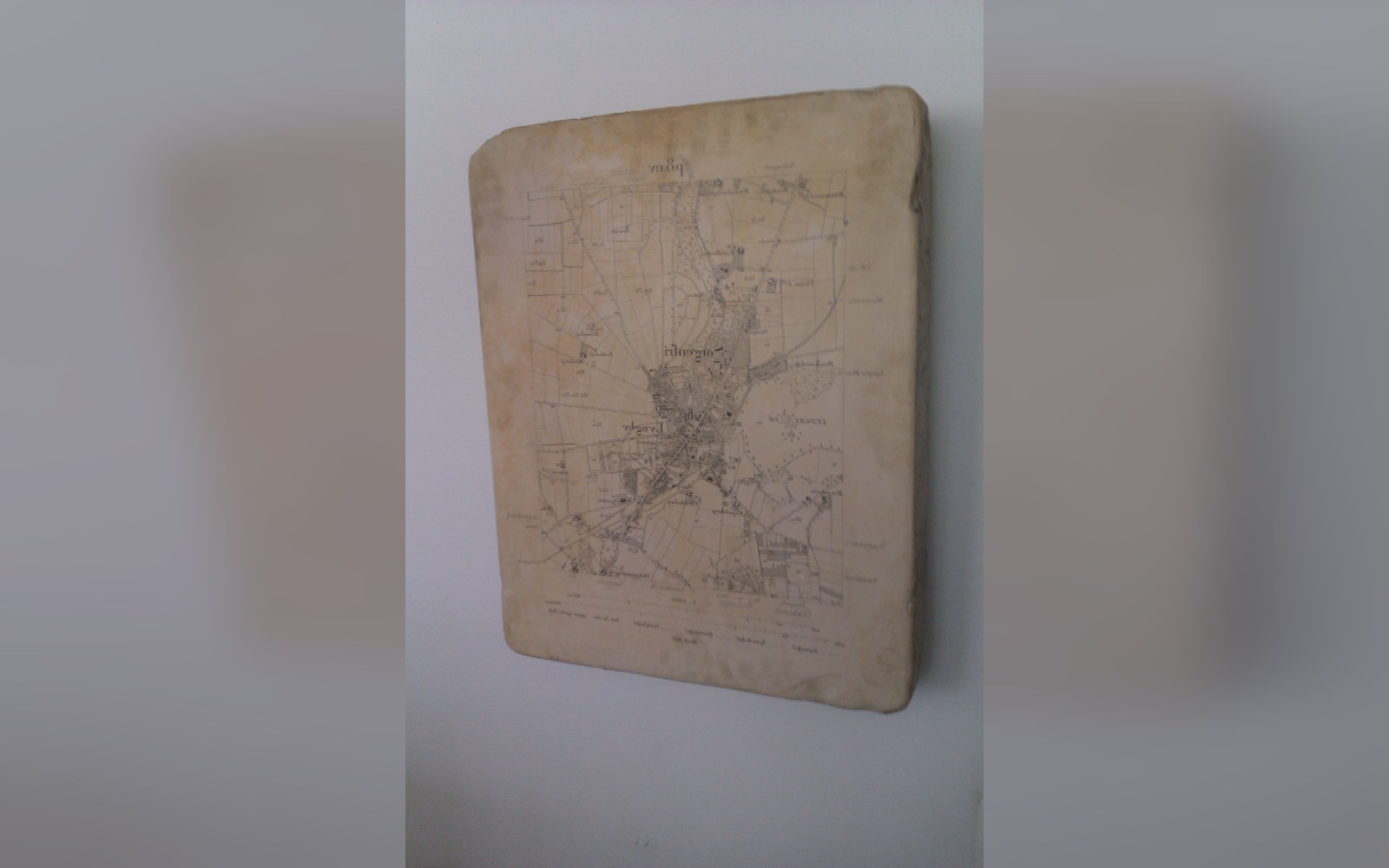
A lithographic stone, unlike a woodblock, survives use without structural deterioration unless it is deliberately ground down and reused. This gave publishers an unusual option: to reprint from the original stone years after the first run, provided the stone had been kept. Whether the stones used for the Hebra atlas were preserved after the series concluded, or were ground and recycled by the workshop for new commissions, is a question of institutional record rather than technical necessity. The economic logic of a printshop, where stone was costly and storage space finite, generally argued for reuse. The art-historical logic argued for preservation. In practice, the outcome depended on whoever was responsible for the stones at the moment the edition closed.
What survived in any case is the printed impression: the gathered fascicles, the loose plates, the hand-coloured sheets that collectors and institutions bound into volumes. The Allgemeines Krankenhaus and the collections that grew around Hebra's teaching practice did not preserve the manufacturing process — they preserved its output. The atlas as it now exists in libraries and cabinets is the record of what the stone and the press, combined with the hand-colourist's brush, could achieve in the middle decades of the nineteenth century. That the images remained usable as teaching tools for years after photography had become available is not a sentimental judgment; it is a comment on how precisely the lithographic process had been made to serve observation.