Anton Elfinger, who drew them
The lithographic plates of Hebra's atlas carried a signature that belonged to two worlds at once — one of the finest caricaturists in Vienna, and the most scrupulous recorder of skin the city ever produced.
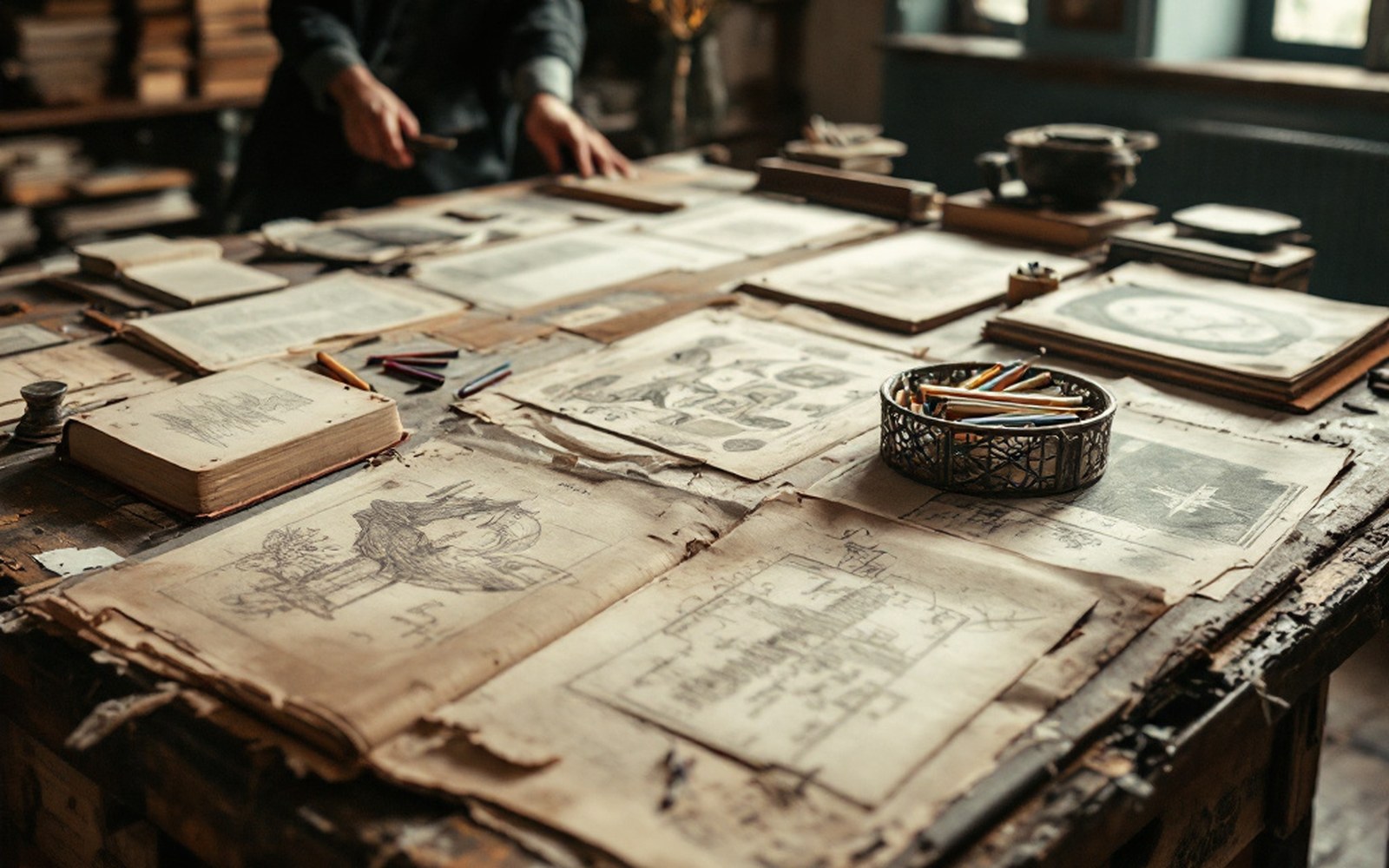
A Pencil Trained on Human Faces
Anton Elfinger was born in Vienna in 1821 and trained as an artist in an era when the boundary between fine illustration and popular print was genuinely porous. He became known in the city under the pen name Cajetan — a pseudonym that attached itself to a long run of satirical drawings published in the Viennese comic press, most notably in the weekly Kikeriki and related journals that thrived in the years after the 1848 revolution, when Austrian censorship relaxed just enough for political caricature to breathe. As Cajetan, Elfinger drew politicians with their vanities intact, officials caught mid-pomposity, the street life of a Habsburg city sharpening itself into a joke. The craft required acute observation of surface — the set of a jaw, the droop of an eyelid, the exact way skin gathered above a collar — and that is precisely the eye he brought to the consulting room.
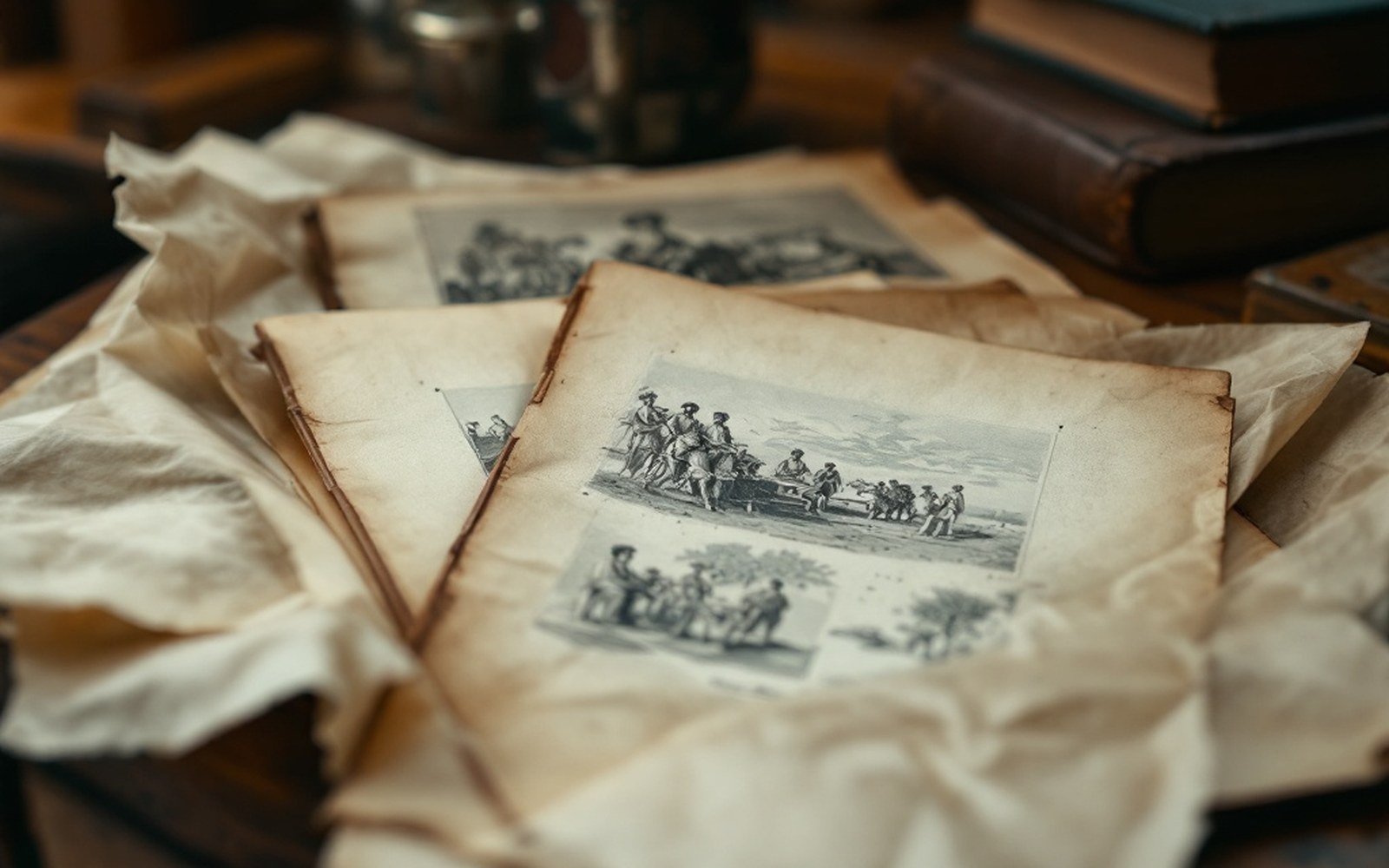
The connection to Ferdinand von Hebra was not accidental. Hebra, working at the Allgemeines Krankenhaus and reorganising dermatology around pathological anatomy rather than surface appearance, needed an artist who could record objective form without idealising or distorting it. What he needed, in other words, was exactly the skill a caricaturist develops: the ability to see what is actually there rather than what convention says should be there. A portrait painter trained to flatter was useless. A natural-history illustrator trained on botanical symmetry was equally useless. Elfinger, who spent his professional life catching the unguarded truth of a face, was the right person.
The Work of the Plates
The atlas — formally the Atlas der Hautkrankheiten, issued in parts from 1856 through the 1870s — required Elfinger to work in a medium that suited him: lithography, which prints from a drawing made directly on limestone with a greasy crayon or ink. There is no intermediary engraver translating the artist's line into cut marks on metal; the hand that draws is the hand the press reads. For a draughtsman of Elfinger's precision, this directness was everything. The tonal range achievable on stone — from a fine grey wash to a dense black, with every gradation between — let him render the three-dimensional character of surface in a way that wood engraving, the workhorse medium of popular illustration, could not easily match.
The production process placed Elfinger in close collaboration with Hebra himself, and this is documented in the atlas's imprints and prefatory matter: the physician directed the clinical content while the artist was responsible for the drawn interpretation. What that meant in practice was that Elfinger attended patients in the wards, made studies from life, and then worked those studies up onto the lithographic stone. The colouring that followed — applied by hand, impression by impression, by workshop colourists working from a master copy — depended entirely on the accuracy of the underlying drawn structure. If Elfinger's line failed, no amount of watercolour laid over it could rescue the plate. It never failed.
What distinguishes his plates from the run of nineteenth-century medical illustration is exactly the quality his caricature work demanded: specificity without sensationalism. The compositions are calm. The framing isolates the area of clinical interest without theatrical staging. And yet within that restraint there is real drawing — modelling that records the behaviour of tissue under light in a way that gives the reader a sense of three-dimensional form rather than a flat diagram. Hebra's reclassification asked dermatology to think about what tissue was doing, not merely what it looked like; Elfinger's plates ask the same question in graphic terms, and answer it with the same precision.
Two Careers, One Eye
It would be easy to treat the caricature work and the medical illustration as separate compartments, but Elfinger himself seems not to have separated them. He continued producing work as Cajetan throughout the years of the atlas project, and the two modes of looking inform each other in ways that are visible on the page. The caricaturist's habit of finding the structural truth beneath a surface made him an ideal observer for a physician who believed that skin disease had structural explanations. Both Hebra and Elfinger, by different routes, were committed to what you actually see rather than what a received classification told you to expect.
Elfinger died in Vienna in 1864, which means he did not live to see the atlas completed; the project extended well beyond his death, with later parts carrying different hands. This is part of why the atlas came out in pieces over such an extended period: contributors, printers and artists changed as decades passed, and a complete set assembled from its original parts reveals the variation in graphic quality across gatherings. The plates Elfinger drew are identifiable not merely by the imprint but by their character — a consistency of observation that later contributors did not always sustain. Moriz Kaposi, who succeeded Hebra and oversaw the later stages of the publication, inherited a standard of visual argument that had been set by a man who drew politicians for laughing readers.
Chronology
- 1821Elfinger born, Vienna
- 1856Atlas der Hautkrankheiten begins publication in parts
- 1864Elfinger dies; atlas production continues without him
- 1870sFinal parts of the atlas appear under Kaposi's oversight
What Remains
The plates survive in the copies of the atlas held by major medical libraries and rare-book collections across Europe. Because the atlas was issued by subscription and bound by its individual owners, copy condition varies substantially; some gatherings retain their tissue guards — the thin interleaving sheets placed between plates to prevent the hand-coloured surfaces from offsetting onto adjacent leaves — while others have lost them. Where the tissue guards survive, they are themselves evidence of the care the original production extended to Elfinger's work: the publisher understood that the drawings were worth protecting.
The object evidence
- Tissue guards as preservation evidence — their presence or absence in surviving copies
- Variation in plate quality across gatherings as different artists contributed
- Imprint lines as documentation of artist, printer and physician collaboration
The wax moulages made for teaching at the Viennese clinics in the same period were intended to do something the plates could not — to exist in three dimensions, to be handled, to meet the student in space rather than on the page. But the moulages and the lithographic plates complemented each other as teaching tools: the moulage recorded what the atlas could only approximate, and the atlas gave the student a portable, reproducible image that no moulage cabinet could provide in sufficient number. Elfinger's drawings were the portable version of knowledge that otherwise required a patient in the room.
What the plates demonstrate, looked at now as objects rather than as clinical documents, is that good scientific illustration has never been separable from good drawing, and that good drawing is a form of disciplined attention to visual fact rather than a decorative supplement to text. Elfinger brought to Hebra's project a hand trained on the hardest possible subject — the human face trying to conceal itself — and applied it to surfaces that had, until Hebra, been badly served by both medicine and art.