The workshop behind the plate
The imprint at the foot of a lithographic plate names names — and those names open a window onto the craft trades that made Viennese medical illustration possible.
The people in the credit line
Ferdinand von Hebra's Atlas der Hautkrankheiten did not emerge from a single hand or a single room. Between the draughtsman who sat at the bedside and the bookseller who dispatched paper-wrapped gatherings to subscribers, a small chain of specialists left their marks — sometimes literally — on every plate. Reading the imprint of any fascicle issued between 1856 and 1876 is an exercise in recovering that chain.
Anton Elfinger was the first and most important link. Trained as an artist rather than a physician, he worked in a dual career that included political caricature for the Viennese press, and the contrast tells you something about the precision his medical commissions demanded. Where caricature exaggerated, the dermatological plate had to suppress nothing and invent nothing: every detail of surface, edge and colour was a claim about a real lesion on a real patient in the wards of the Allgemeines Krankenhaus. Elfinger's drawings were made directly from Hebra's cases, giving the atlas the clinical authority that lifted it above earlier illustrated works. His name appears in the imprint as draughtsman, a credit that was professionally meaningful in a trade where anonymous workshop labour was common.
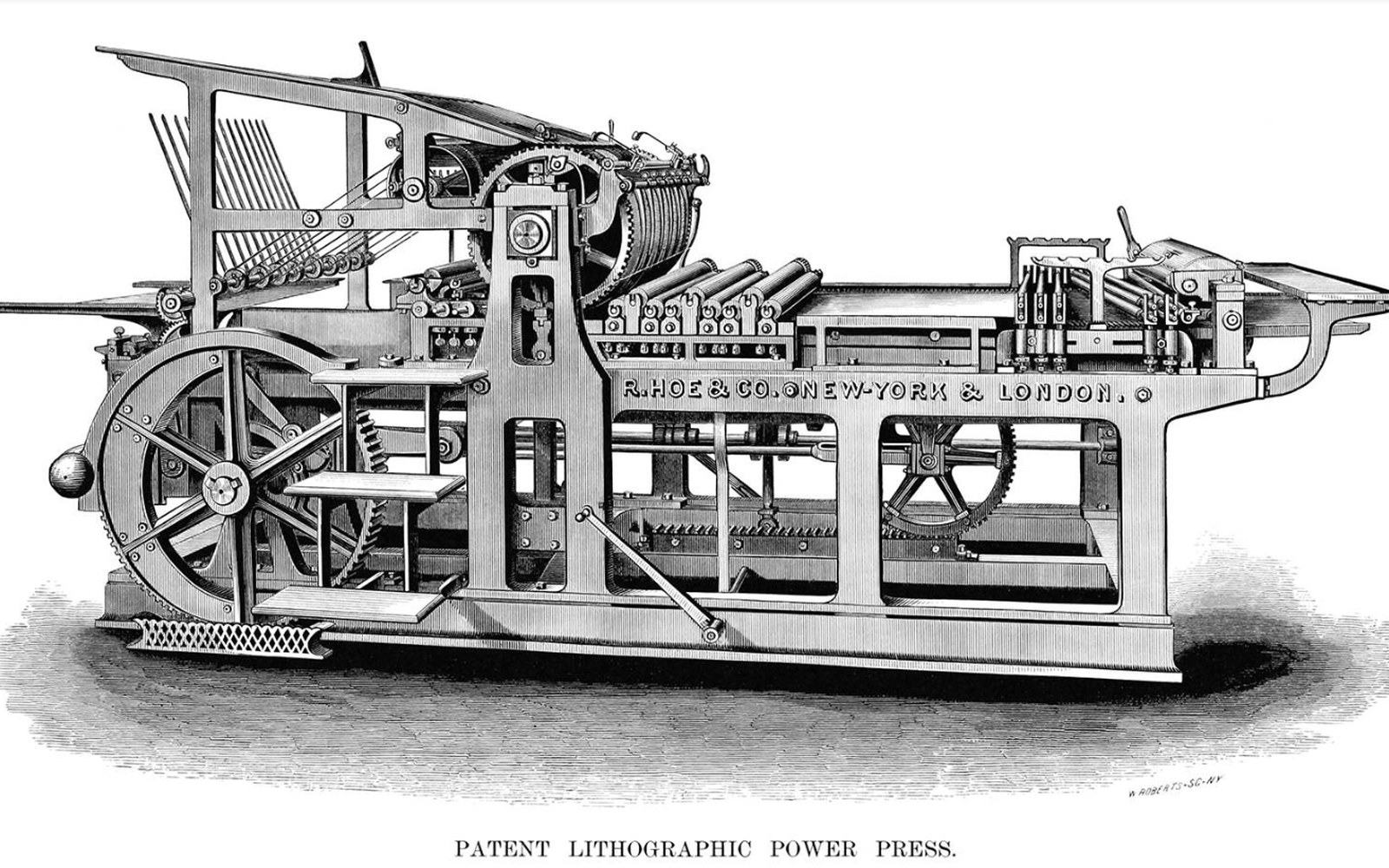
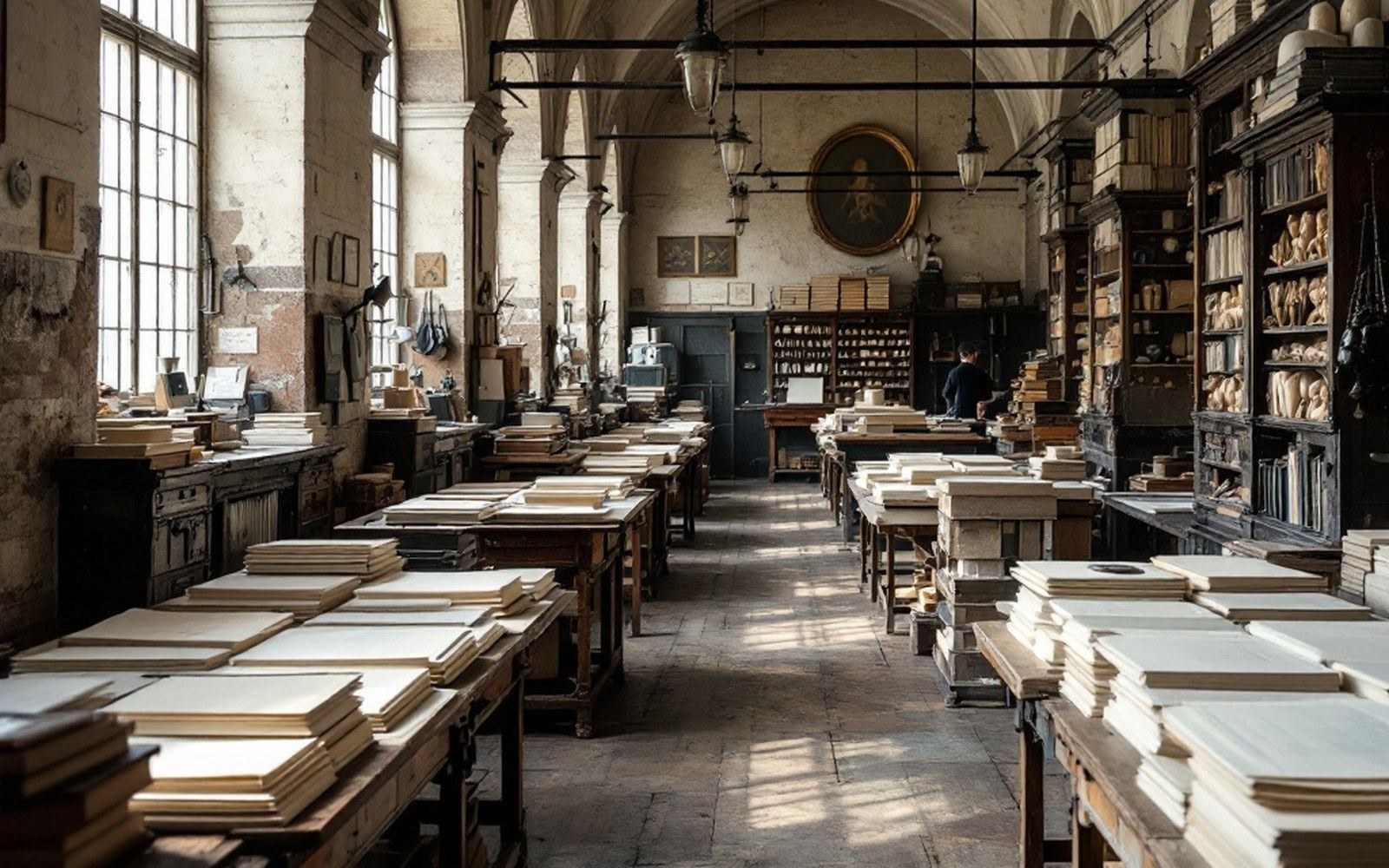
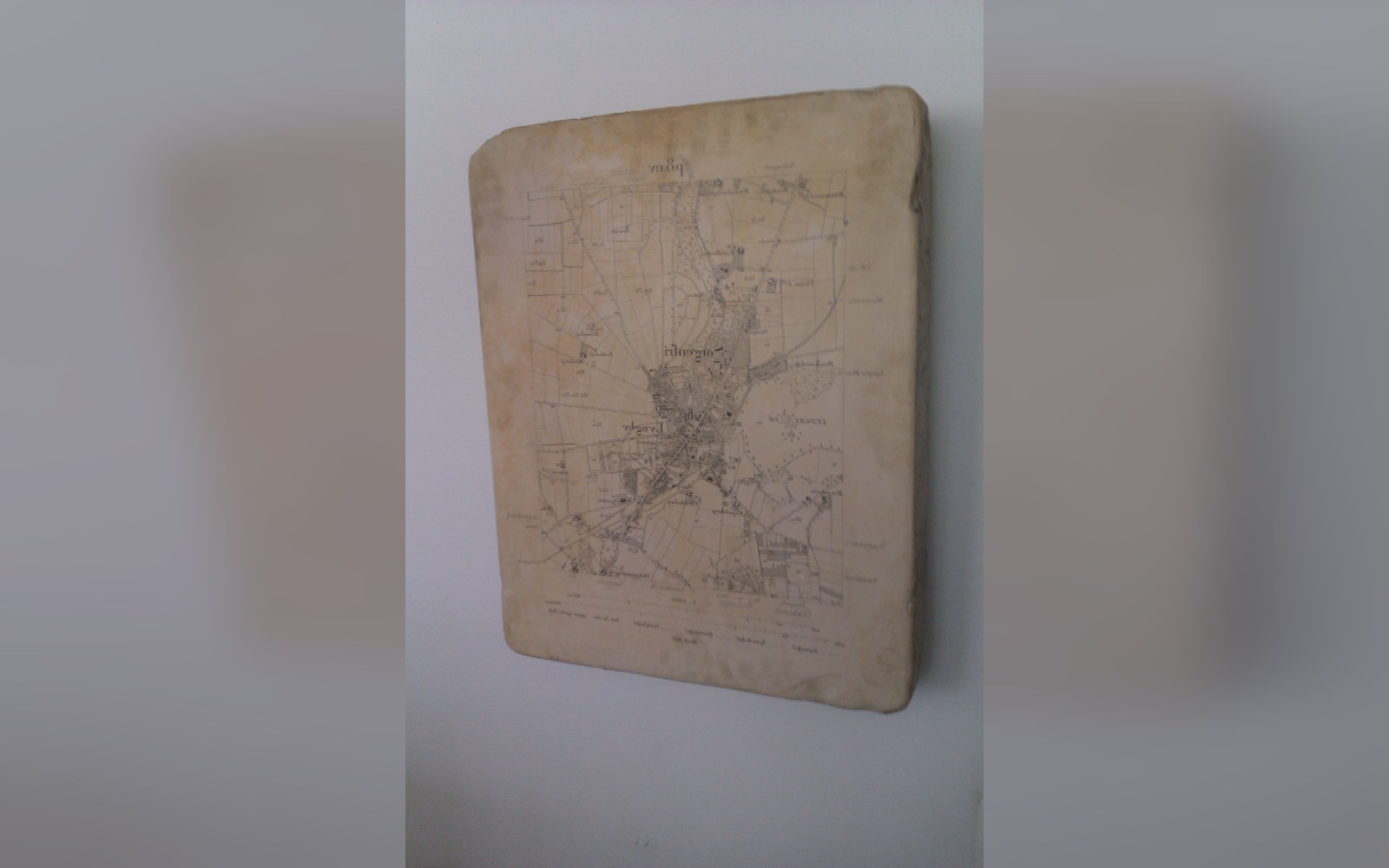
The drawing, however, was only raw material. Lithography — printing from a greased image drawn or transferred onto a prepared limestone block — required a second layer of skill: the transfer lithographer or Steindrucker who translated Elfinger's work onto stone without losing the tonal gradations that distinguished one surface texture from another. The limestone blocks used for the atlas were large, expensive and unforgiving; a slipped mark could not be corrected without grinding the surface back and beginning again. Viennese printing firms that handled scientific and medical work were concentrated near the university quarter, and the better houses maintained dedicated stone-polishers, transfer workers and press operators as distinct trades within the same workshop. The history of lithography as a commercial printing process reaches back to Alois Senefelder's experiments in Munich in the 1790s, and Vienna adopted the technique rapidly for both artistic and scientific publishing.
The colourists and the tissue guard
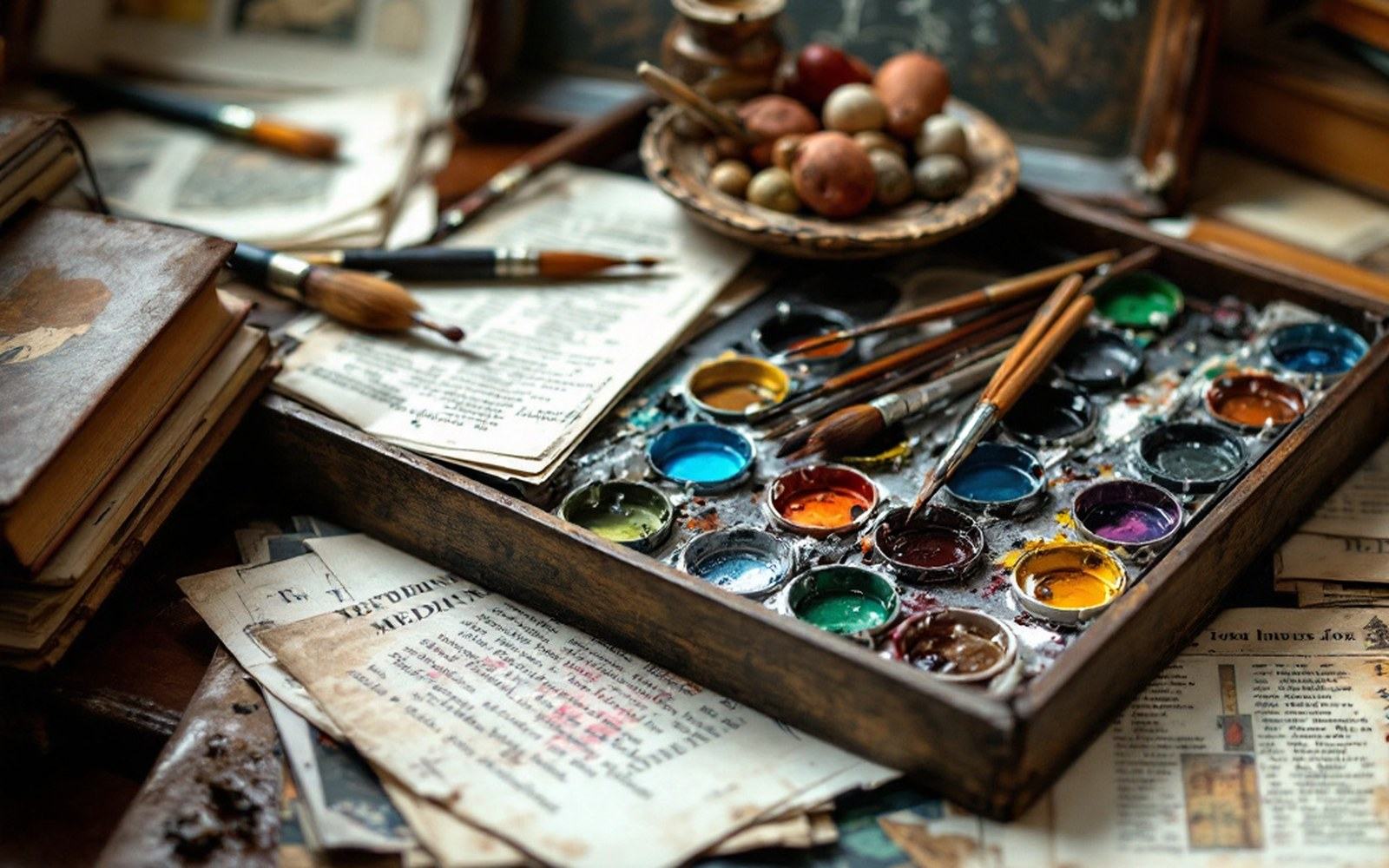
Once an impression came off the press it was, by the standards of the Atlas, unfinished. The printed outlines and tonal grounds were coloured by hand, each sheet worked by a colourist following a master copy approved by Hebra himself. This was piecework, often performed by women in workshop conditions, and the consistency of a complete set of fascicles depended entirely on how faithfully each colourist held to the master. Because colour was applied after printing, individual copies of the atlas differ in subtle ways that a close comparison of surviving sets makes visible: slightly warmer or cooler tones, a heavier or lighter touch in the shadow passages.
People in the workshop
- Ferdinand von Hebraclinician and editorial authority behind the Atlas
- Anton Elfingerdraughtsman; named in the imprint; also worked as a political caricaturist
- Colouristsanonymous pieceworkers, often women, who hand-coloured each impression after printing
Between the coloured plates and the next sheet, a tissue guard — a thin leaf of translucent paper — was tipped in to prevent offsetting. It is one of the small forensic details that confirms the plates were coloured before binding, not after. Collectors and librarians who have handled complete sets note that guards sometimes bear faint ghost impressions of the colour beneath: the unintended contact record of a workshop in which drying time was a constant commercial pressure.
The business infrastructure behind all of this was the subscription model. The atlas came out in parts over nearly two decades, which meant the print run for any single fascicle had to match an unpredictable and shifting subscriber list. Print runs that were too short left latecomers without early numbers; runs that were too long left the publisher carrying unsold stock of hand-coloured sheets — expensive material to hold in inventory. Complete sets are consequently rare, and their condition varies in ways that reflect both the workshop's quality control and the accidents of individual ownership.
The imprint, then, is not a formality. It is the compressed signature of an economic arrangement: a clinician, an artist, a lithographic trade and a publisher, each dependent on the others to get a coloured plate from a hospital ward to a subscriber's shelf.