Colour was added after printing, by hand
Each impression left the lithographic stone in black and grey; what made it a medical atlas was applied by brush, one copy at a time, by workers following a master.
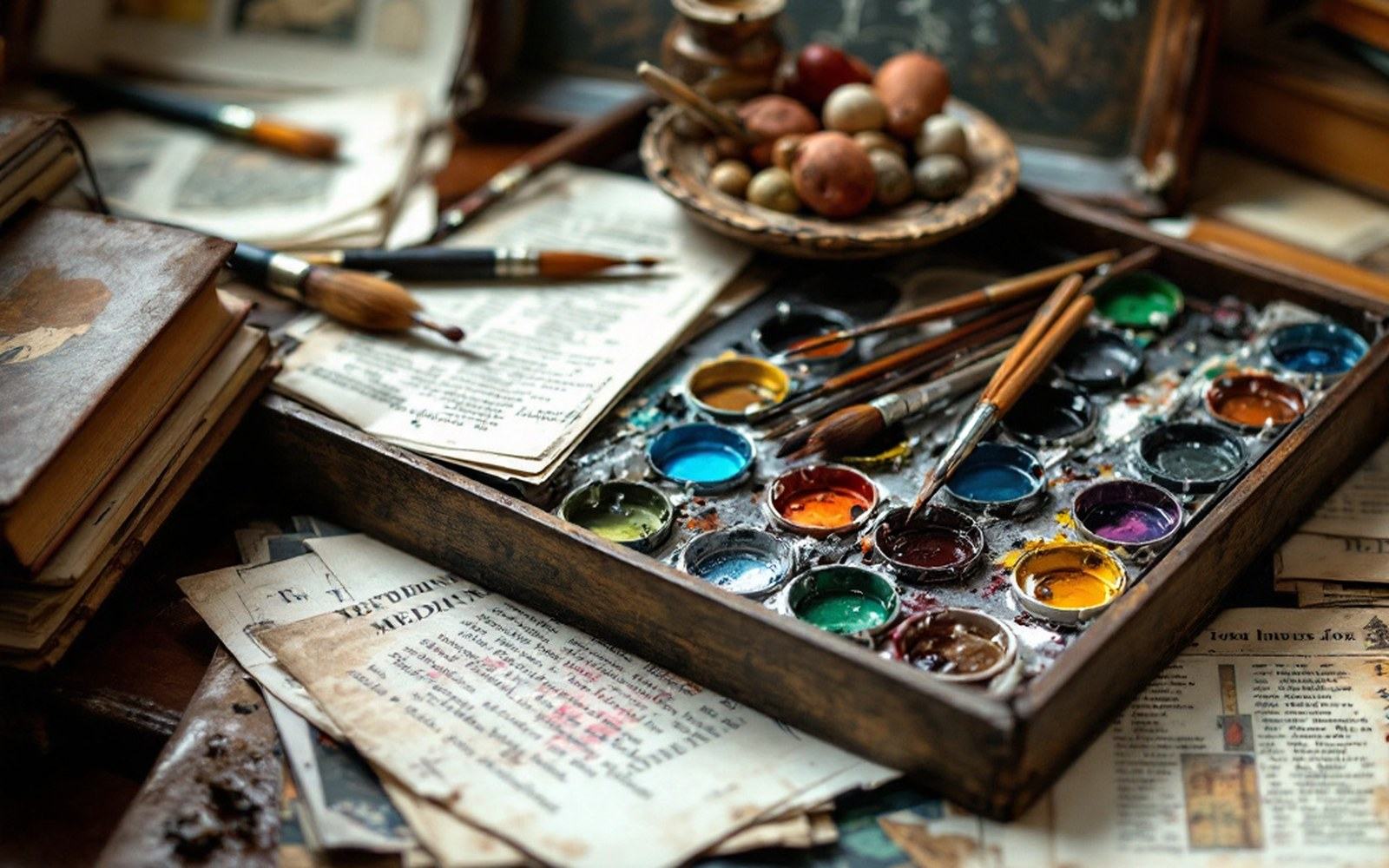
The stone printed outlines; the hand supplied the rest
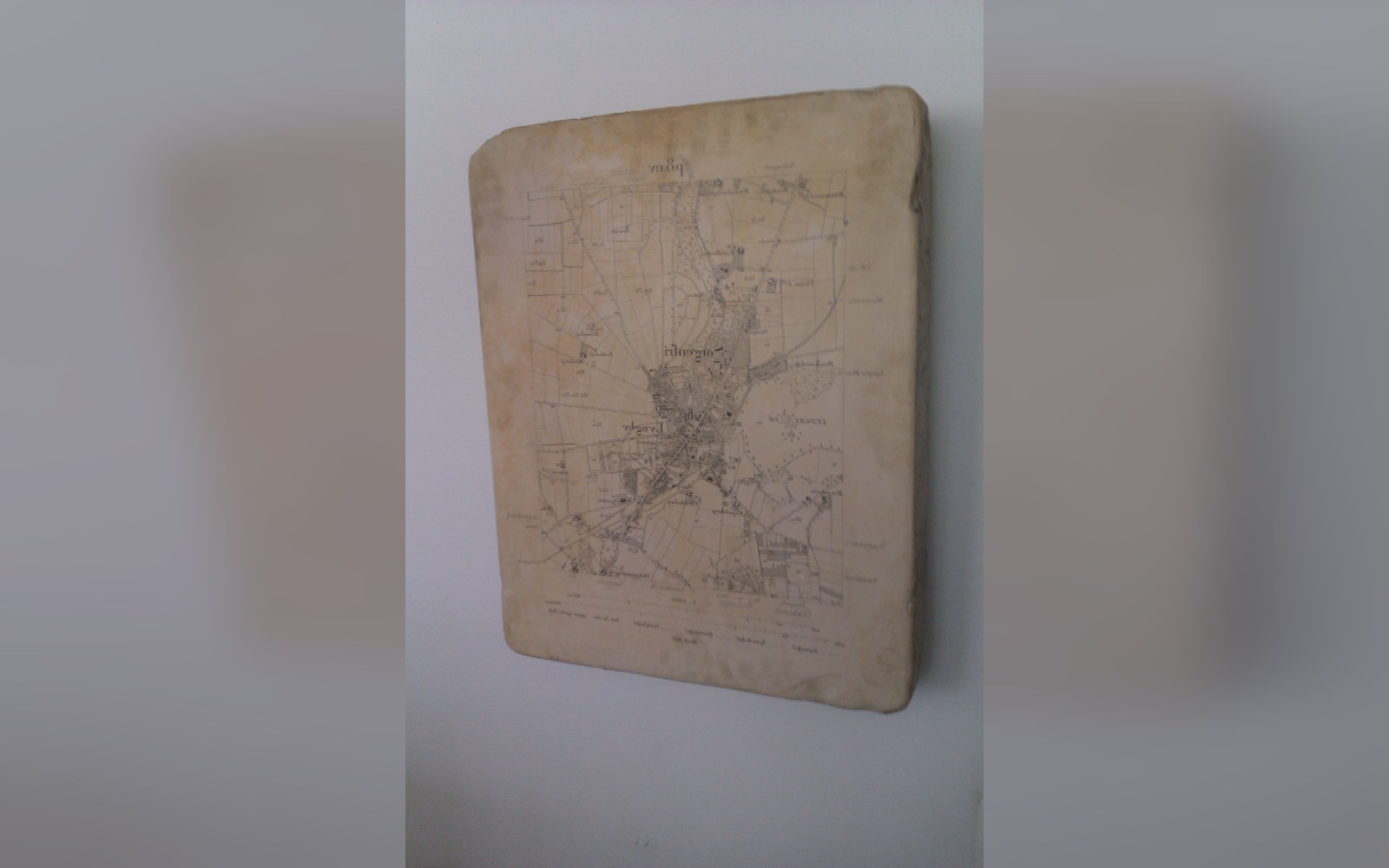
Lithography, as it was practised in Vienna in the middle of the nineteenth century, produced tonal images of considerable subtlety — the greasy crayon dragged across the limestone surface could record a gradient, a shadow, the soft edge of a swelling. What it could not produce, without additional process, was colour. The stone itself was monochrome. When Ferdinand von Hebra's great atlas of skin diseases began to appear in parts from the 1850s onward, its clinical usefulness depended entirely on colour, because the pathological anatomy underlying his reclassification was visible in part through hue: the redness of one presentation, the pallor of another, the brownish infiltration of a third. A black-and-grey impression could convey form and texture. It could not carry that information.
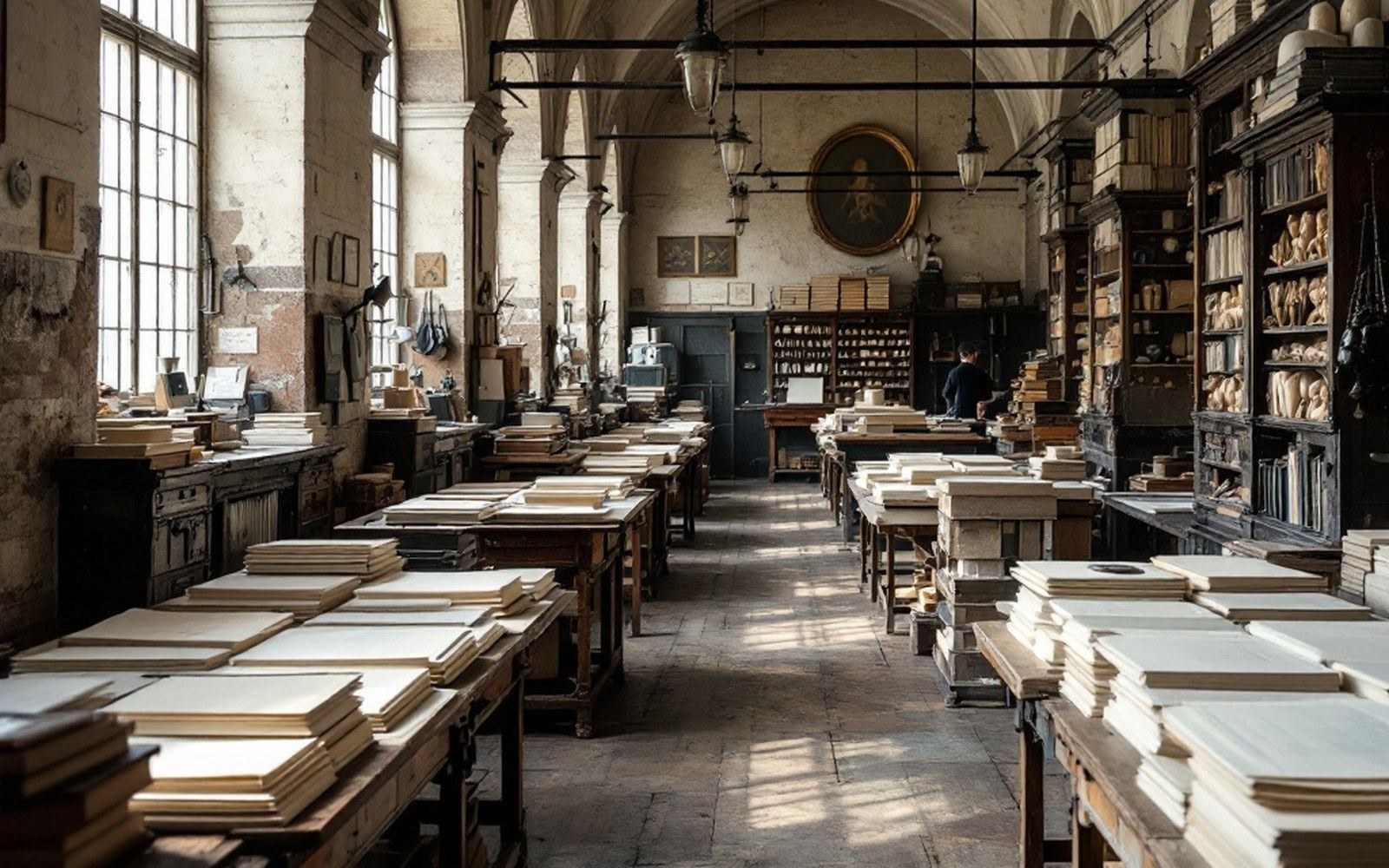
The solution was well established in the trade: hand-colouring after printing. Each sheet came off the press as a finished impression in ink, and then passed to a separate workshop stage — often a separate room, sometimes a separate contractor entirely — where colourists applied watercolour or gouache pigments by brush, working individually across a stack of identical impressions. The process was painstaking and slow. A complex plate, with multiple tonal zones and fine anatomical detail, might require a skilled worker an hour or more per copy. When a gathering — the unit of a few plates issued together to subscribers in paper wrappers — was prepared for dispatch, every impression in it had to pass through this stage before binding could even be considered.
A master copy and the variations it produced
The system depended on a reference. At the start of a colouring run, a master copy of each plate was prepared, usually by the most experienced colourist or under the supervision of the artist responsible for the original drawing. For the Hebra atlas, that drawing had been done by Anton Elfinger, whose draughtsman's eye gave the plates their underlying precision. The master established the palette: which pigment went where, how dilute, how layered. Workers then replicated it impression by impression, holding the master beside each new sheet as they applied the colour.
The practical result is that no two copies of the same plate are identical. A worker who loaded a brush slightly heavier on one pass, or who mixed a batch of pigment fractionally more orange than the master, produced an impression that diverges from the next one in the stack. Over a long run — and the Hebra atlas was issued over roughly two decades, with individual plates reprinted as demand required — the cumulative variation becomes substantial. Copies held today in different institutional collections can differ visibly in the warmth of a background tint, the saturation of a focal area, or the precision with which a boundary between zones was executed. These are not errors in any meaningful sense; they are the trace of individual labour, applied copy by copy.
Chronology of the colouring process
- Impression printed from stone — monochrome, ink only
- Master copy prepared by senior colourist or artist
- Individual impressions coloured by hand, one at a time, following master
- Tissue guards interleaved before gathering is assembled for dispatch
- Reprints (over ~two decades of publication) may use revised or replacement masters, producing palette shifts
Comparing two physical copies side by side is the clearest way to see the hand behind the image. The lithographic line is identical — it is the same stone, the same impression — but the colour sits differently, because two different pairs of hands put it there on two different days, possibly in two different years if the plate was reprinted.
What the trade looked like from the inside
Hand-colouring at this scale was a workshop trade, and its practitioners were predominantly women, working under piece-rate arrangements that rewarded speed without necessarily rewarding consistency. The master copy guarded against the worst divergence, but the economics of the arrangement pushed toward quantity. A medical publisher issuing a technical atlas needed enough coloured copies to satisfy a subscription list; the colourists needed to move through the stack.
This is not to say the work was careless — the surviving plates in major collections demonstrate genuine skill, and the best impressions reward close inspection. But it places the colouring operation at some distance from the original act of artistic draughtsmanship. Elfinger drew once; the colourists replicated his colour reference dozens or hundreds of times. The imprint on a finished gathering — the text giving printer, publisher and place — names the commercial principals of the operation. The colourists themselves are almost never named. They are visible only in the variations they left behind.
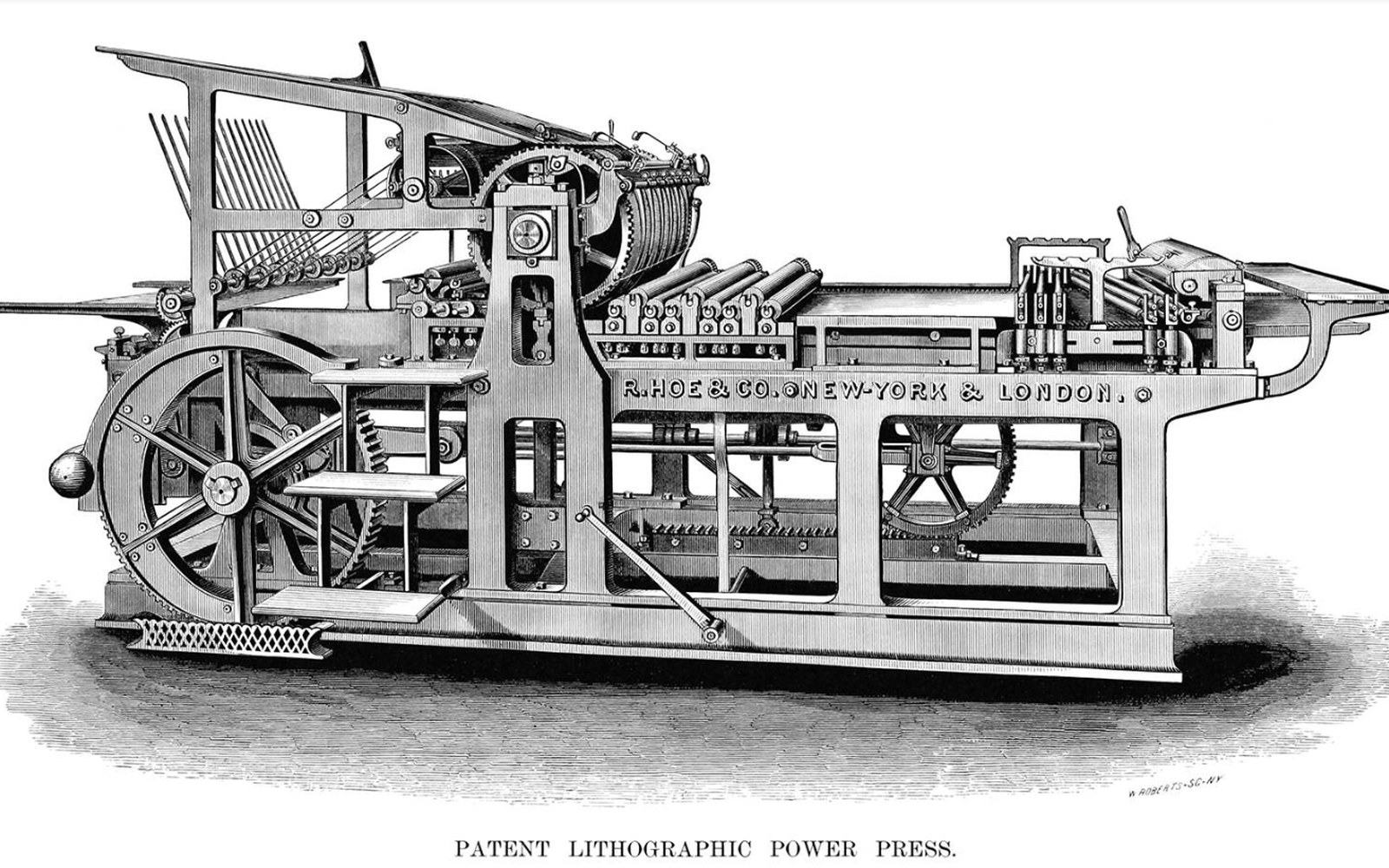
The lithographic printing house that produced the Hebra plates was part of a Viennese trade infrastructure that served both scientific publishing and the broader market for illustrated print. The technical demands of a medical atlas — stable registration, consistent ink density across a print run, paper of sufficient weight to accept watercolour without cockling — sat at the upper end of what commercial lithography was expected to deliver. Tissue guards, the thin interleaving sheets placed between plates in a finished binding to prevent colour from offsetting onto the facing page, are one evidence of how seriously the problem of keeping the colour stable through handling was taken.
What this means for copies that survive
A librarian or curator handling a surviving copy of the Hebra atlas is, among other things, handling a record of this colouring process. The variation between copies is historically legible: it tells you something about the run order, about which pigments a particular workshop was using at a particular moment, about the degree to which quality control tightened or loosened across the decades of publication. A late printing of a plate that had first appeared in an early gathering will often show a slightly different palette from the earliest impressions, because the master copy itself had been worked and reworked, or because different pigments had become available or preferred.
The variation evidence
- No two hand-coloured impressions are identical
- Divergence visible in: tint warmth, pigment saturation, edge precision between colour zones
- Variation increases across a long print run and between reprints
- Comparing institutional copies is the primary method for tracing this
Why photography could not replace this process at the time is partly a matter of colour — early photographic processes were not colour-sensitive in the way the plates required — but it is also a matter of scale and unit cost. A hand-coloured lithograph, for all the labour it contained, could be produced to order in the quantities a subscription publisher needed. A photographic alternative in the 1850s and 1860s could not.
What the wax moulage collection at institutions such as the Josephinum preserved was, in a sense, what the atlas's colouring process was always reaching toward: a three-dimensional, fully chromatic record that no amount of careful brushwork on a flat sheet could entirely replicate. The two technologies — printed atlas and modelled wax — existed in productive tension, each doing what the other could not. The atlas travelled; the moulage stayed in its cabinet. The atlas could be reprinted; the moulage was singular. And the colour in the atlas depended, every time, on a worker with a brush and a master copy propped at the edge of the table.