Kaposi, after him
He described the tumour that still carries his name in a paper that reads, still, like a demonstration of the school's entire method.

The 1872 Paper and What It Did
Moriz Kaposi joined Ferdinand von Hebra's department at the Allgemeines Krankenhaus in Vienna and became his son-in-law, his collaborator, and eventually his successor. In 1872 he published a description of a vascular tumour of the skin — idiopathisches multiples Pigmentsarkom der Haut, idiopathic multiple pigmented sarcoma of the skin — in the Archiv für Dermatologie und Syphilis. The condition now bears his name universally, though Kaposi himself neither sought the eponym nor would have recognised the modern disease burden that gave it global reach a century later.

What the 1872 paper demonstrates is exactly the analytic habit that Hebra had institutionalised: classify by what the tissue is doing, not by surface appearance. Kaposi's description proceeds from the gross presentation to the histological character of the lesion, grounding the classification in pathological anatomy rather than in the colour or configuration a clinician might observe at a glance. That was the school's fundamental move, and the paper is among its clearest surviving instances.
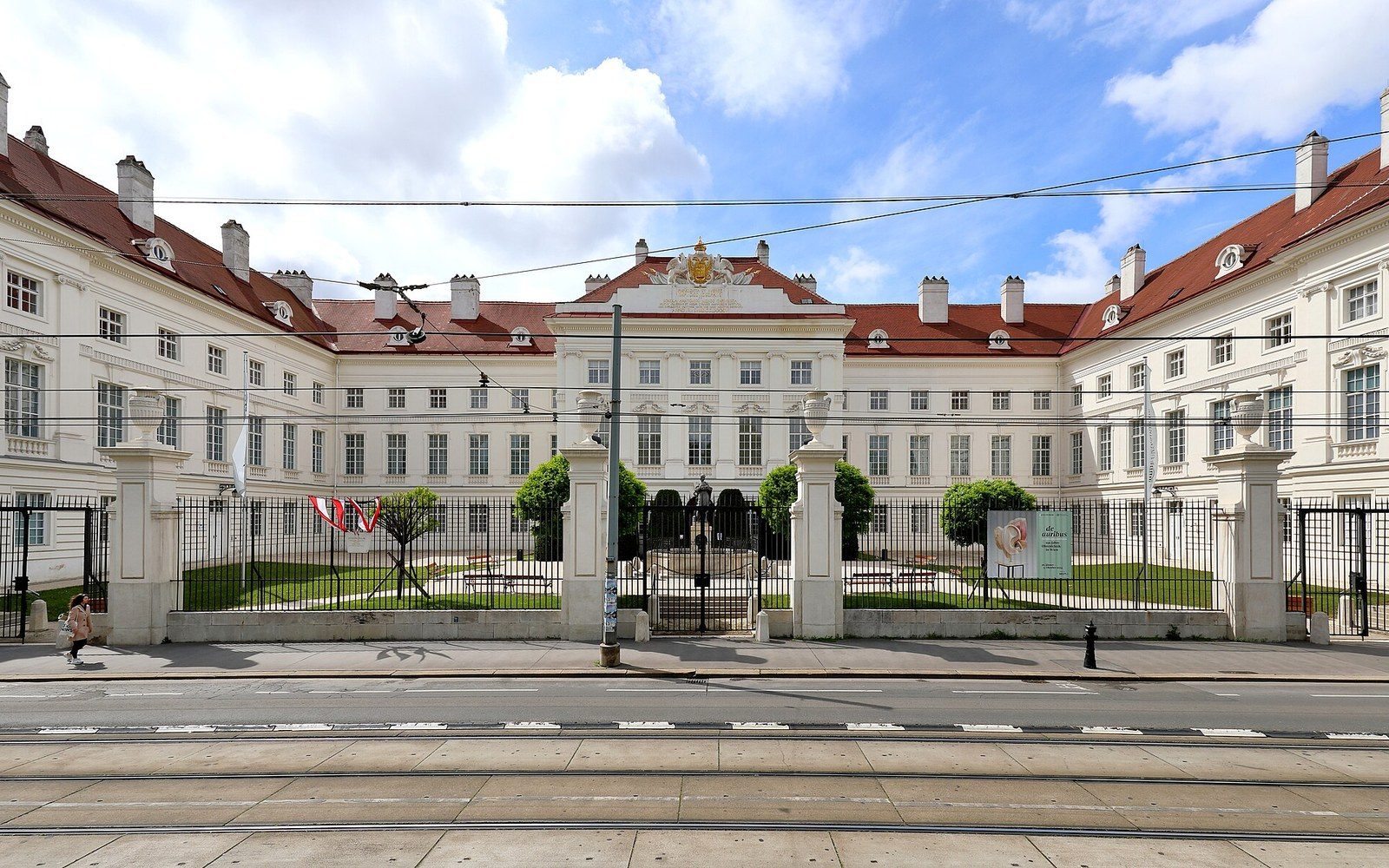
The Vienna school's method depended on a teaching hospital large enough to accumulate rare cases in numbers sufficient for comparison. Kaposi had exactly that resource in the wards of the Allgemeines Krankenhaus, one of the largest hospitals in Europe at the time. Rare presentations that a provincial practitioner might encounter once in a career could be observed repeatedly here, described precisely, and brought into a coherent classification — a process that the atlas issued in parts over two decades was designed to carry outward to readers who would never see Vienna.
Chronology
- 1872Kaposi publishes description of idiopathisches multiples Pigmentsarkom der Haut in Archiv für Dermatologie und Syphilis
- 1880Hebra dies; Kaposi takes over the systematic work
- Post-1880Kaposi edits and extends the Lehrbuch der Hautkrankheiten
Kaposi later edited and extended Hebra's own systematic work after Hebra's death in 1880, completing the Lehrbuch der Hautkrankheiten and sustaining the pathological-anatomy framework into the next generation. The eponymous tumour is documented in the historical record of the Archiv für Dermatologie und Syphilis, and Kaposi's place in the lineage of the school is inseparable from the institutional infrastructure — the ward, the library, the atlas, the moulage cabinet — that Hebra had built around him.
The name endures as eponyms tend to: it records priority and place rather than cause, and it ties a tumour to a moment in a Viennese teaching hospital when a junior physician sat down with a method his teacher had given him and applied it with enough precision that the result still holds.